

AI is Now Predicting Cyber Attacks Before They Happen
Security teams use artificial intelligence to improve their ability to detect threats and prevent attacks and respond to security incidents. The ability to forecast cyberattacks stands as the primary use case that can revolutionise the entire field of cybersecurity. Organisations have followed a pattern of responding to security threats by addressing them after they occur. Organisations can use AI-based threat intelligence systems to predict attacks and protect themselves from forthcoming threats.
This blog explores Nepal’s technological progress and highlights how Islington College equips students to become the future leaders driving these advancements.
A Wake-Up Call from the Global Stage
In 2026, a hospital in Germany suffered a ransomware attack which disabled its patient management system for four days. The Southeast Asian bank lost more than $40 million during one weekend . The tax database of a South Asian government was illegally accessed for several months before anyone discovered the breach.
These events represent actual news stories which occurred during the previous 12 months. The research facilities at IBM and Google DeepMind and multiple cybersecurity startups developed new AI-enabled threat intelligence systems which can forecast cyber attacks before they occur.
Quote:
Cybersecurity has traditionally been reactive, addressing threats only after they appear. AI has changed this security system through its development of predictive defense systems which now serve as fundamental components of current security operations.
This article explores the impact of this shift on global businesses, Nepal's digital transformation, and the role you can play in driving this technological change.
How AI Predicts Cyber Attacks — The Science Behind It
Traditional security systems were built like padlocks: if you knew the key (a threat signature), you could block it. The problem is that hackers now constantly change the key. Enter Artificial Intelligence, a system that doesn't need to know the exact key to smell something is wrong.
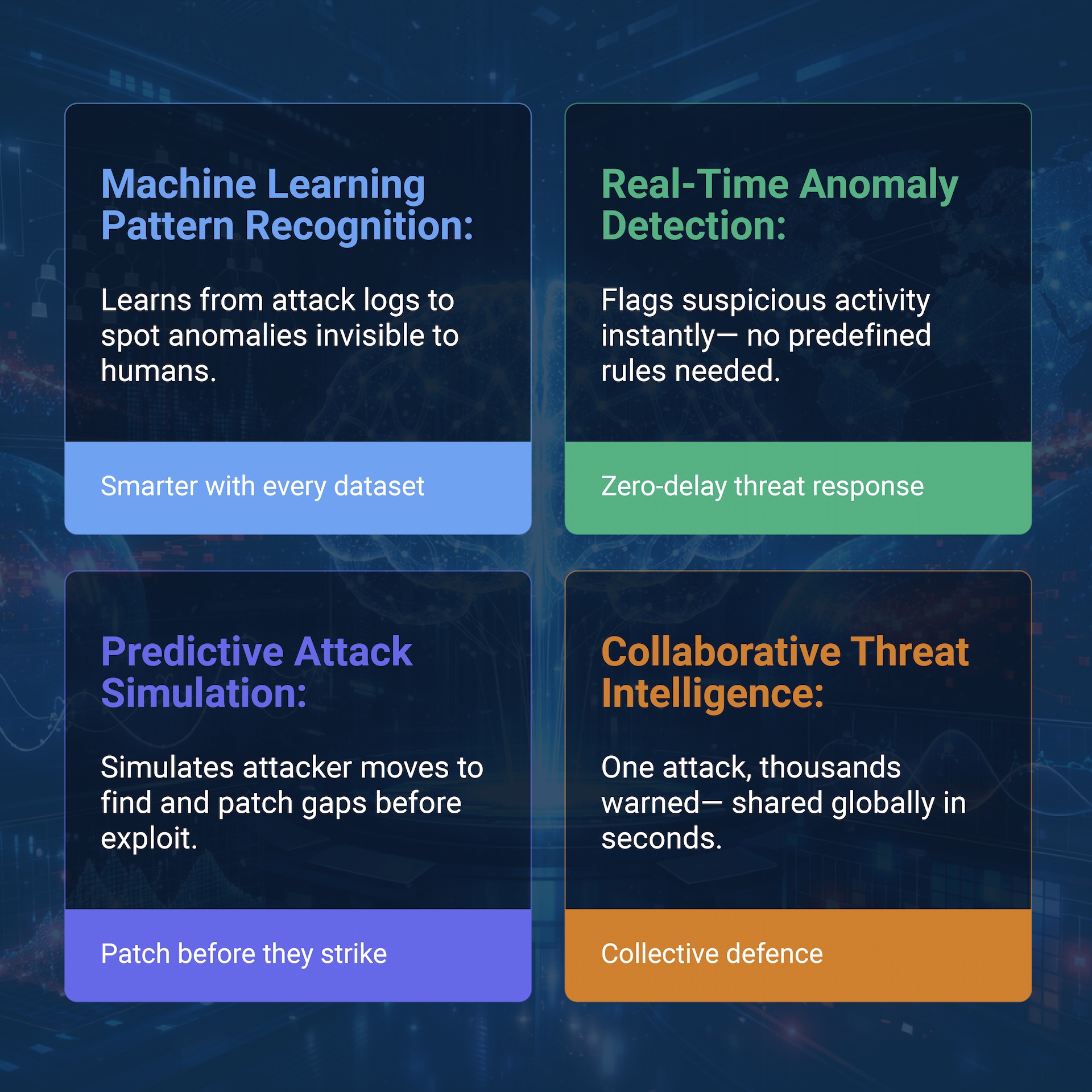
Here are the four core mechanisms that power modern AI threat prediction:
-
Machine Learning Pattern Recognition: ML algorithms detect hidden anomalies in network and user data, improving as they process more information.
-
Real-Time Anomaly Detection: AI security system detects unauthorized access when an employee logs in from a foreign location at 3 AM and enters the payroll database. The system functions without any established rules.
-
Predictive Attack Simulation: AI uses adversarial machine learning to create an attacker simulation which demonstrates how attackers will use known system vulnerabilities to launch actual attacks.
-
Collaborative Threat Intelligence: AI platforms give organisations real-time threat intelligence, sharing lessons from one attack with thousands of others within seconds.
The Technologies Powering cybersecurity Shift
The cybersecurity revolution needs three special types of artificial intelligence to develop its innovations. Machine Learning (ML) creates predictive models which use past data as their foundation. Deep Learning (DL) detects complex patterns that ML misses, while Natural Language Processing (NLP) monitors web and dark web sources to track hacker activity before attacks occur. The combination of these technologies enables IBM's X-Force Threat Intelligence platform to conduct analysis work that equals 1,000 human analysts.
Why This Matters Deeply for Nepal Right Now
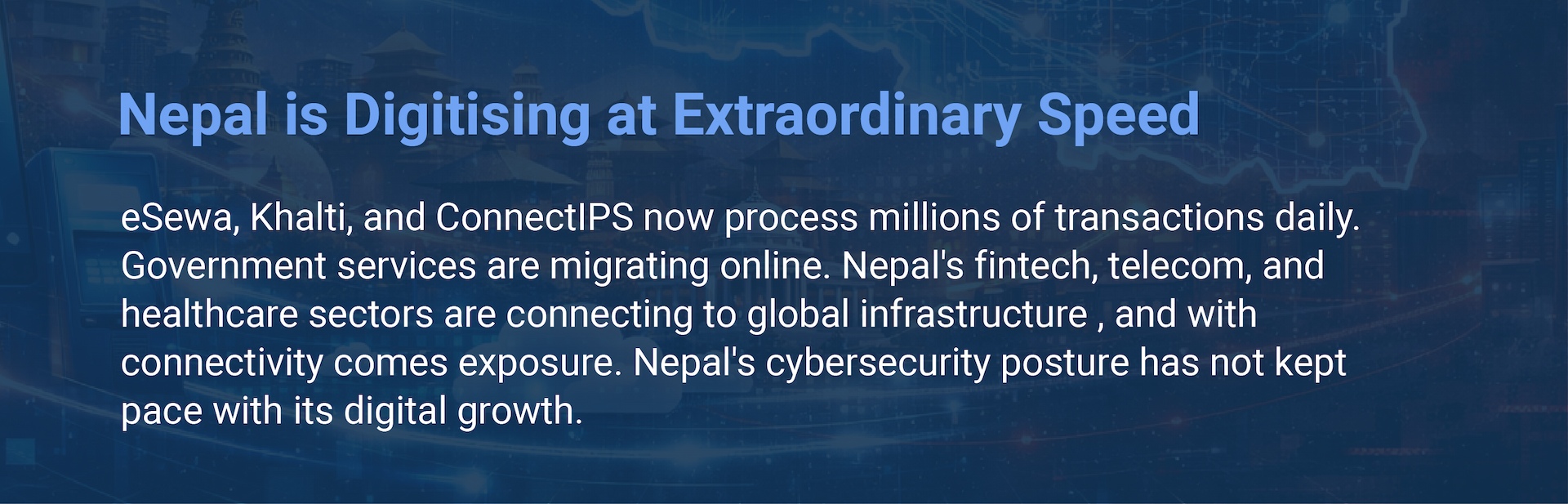
Nepal's digital transformation process witnesses rapid progress because eSewa Khalti and ConnectIPS process millions of government transactions each day. The worldwide connection between fintech and telecom and healthcare systems creates cybersecurity difficulties that local security systems cannot handle. The advanced technologies developed by IBM and Silicon Valley enterprises might appear unreachable yet they create security weaknesses that affect the entire Kathmandu area and its surrounding regions.
Cybersecurity Reality in Nepal — Facts You Need to Know
-
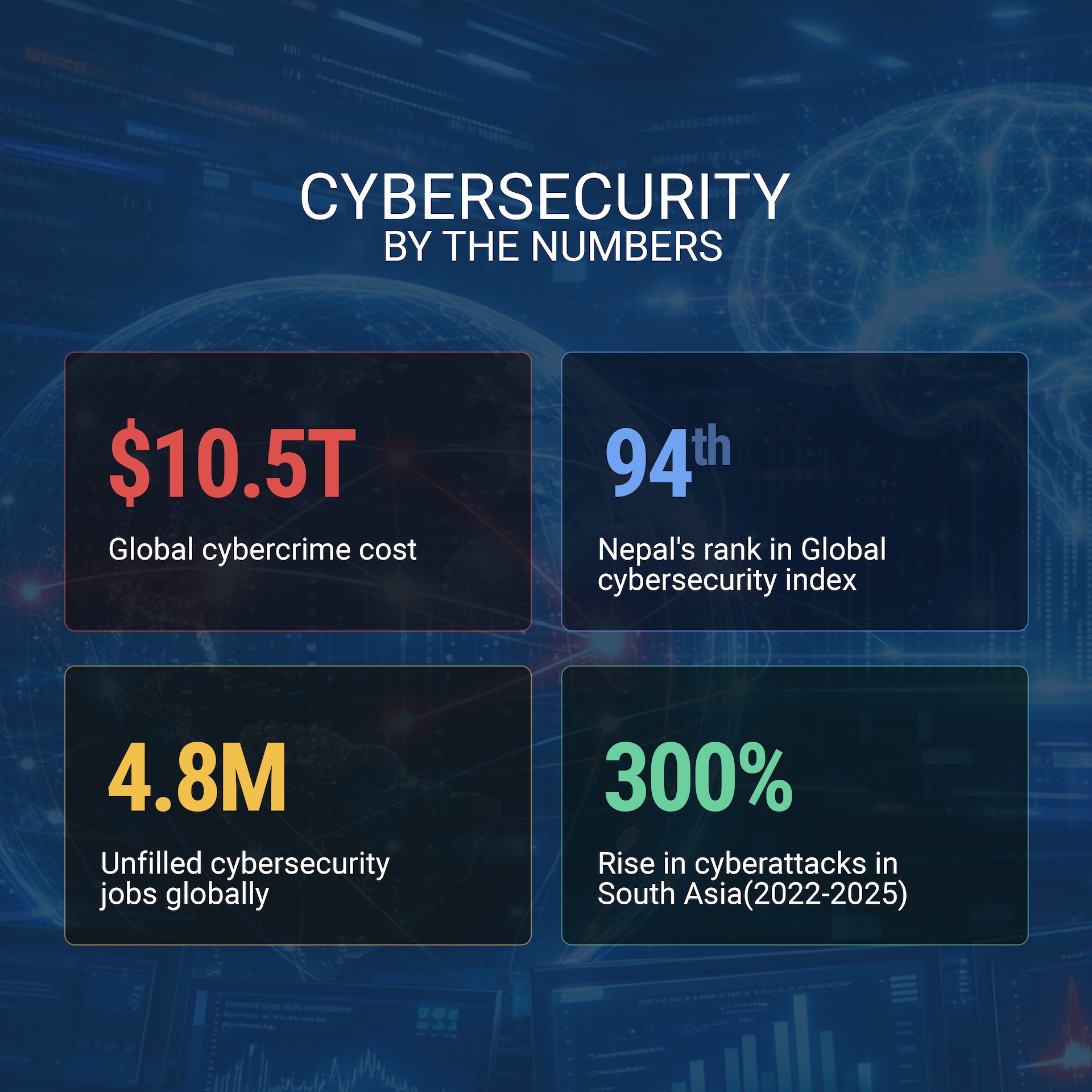
The Global Cybersecurity Index ranks Nepal at 94 but the country needs to make substantial progress in cybersecurity protection.
-
Phishing attacks and malware attacks and social engineering attacks have targeted major Nepali banks and financial institutions.
-
The Cyber Bureau of Nepal Police recorded 18,946 cybercrime incidents for the fiscal year 2024-25 which only includes reported cases.
-
Nepal faces an urgent need for cybersecurity experts who possess specialized training to work in both governmental and business sectors.
-
Nepal lacks sufficient IT security procedures and security training programmes and digital forensic capability.
-
Vairav Tech operates as Nepal's largest cybersecurity company which now provides services to over 200 customers in Europe, America, Australia, and the Middle East. The global market currently requires cybersecurity experts from Nepal.
The global shift to AI-powered cybersecurity serves as more than a news headline for Nepal because it creates a rare historic career opportunity. The country that fills this talent gap fastest wins. The current competition between nations stands at its initial stages.
The Future: Where Is This Technology Heading?
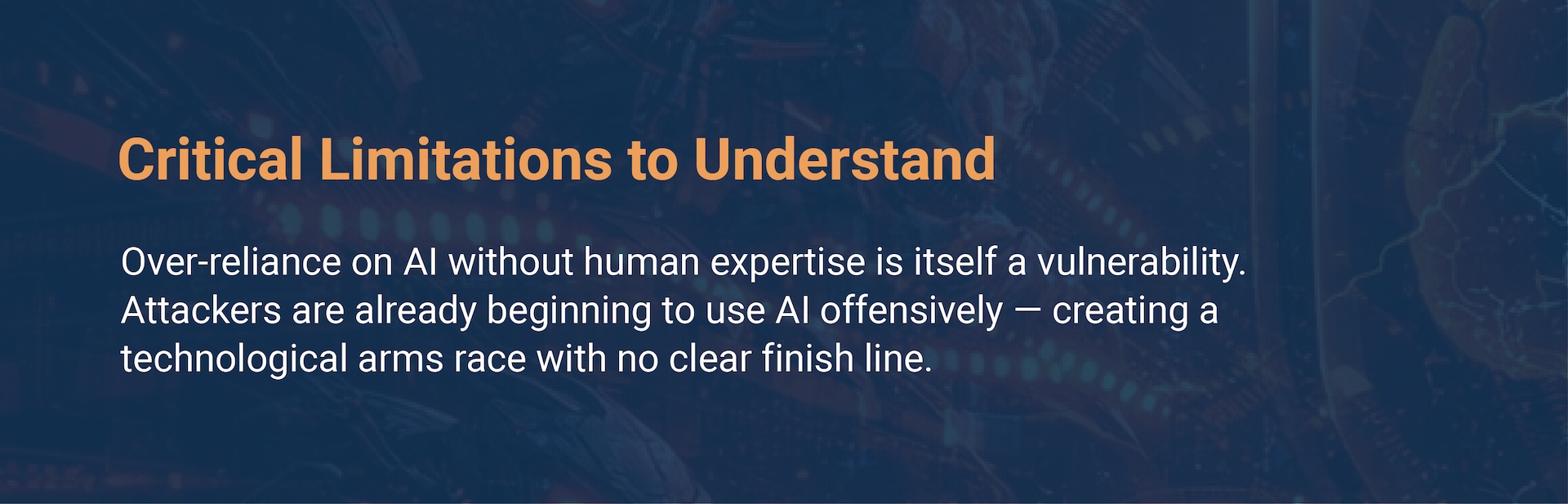
We are still in the early innings of AI powered cybersecurity. What is available today, impressive as it is, is a preview of a much larger shift. Here is what the next decade likely looks like:
Autonomous Cyber Defence (2026–2028)
AI systems that don’t just detect and alert, but automatically isolate compromised systems, patch vulnerabilities, and neutralise threats, with minimal human intervention required. Predictive Regulatory Compliance
Predictive Regulatory Compliance
AI will continuously check an organization's compliance with ISO 27001 and GDPR and NIST through ongoing monitoring which will identify any compliance violations before audits take place.
AI vs AI Warfare
AI will continuously monitor an organisation’s posture against frameworks like ISO 27001, GDPR, and NIST, flagging compliance gaps in real time before audits
Democratisation for Small Organisations
AI cybersecurity will one day become affordable for Nepal’s small businesses, schools, and hospitals, but it still needs people to set it up, manage it, and keep it running. That’s where trained professionals come in.
Your Career Opportunity in Cybersecurity
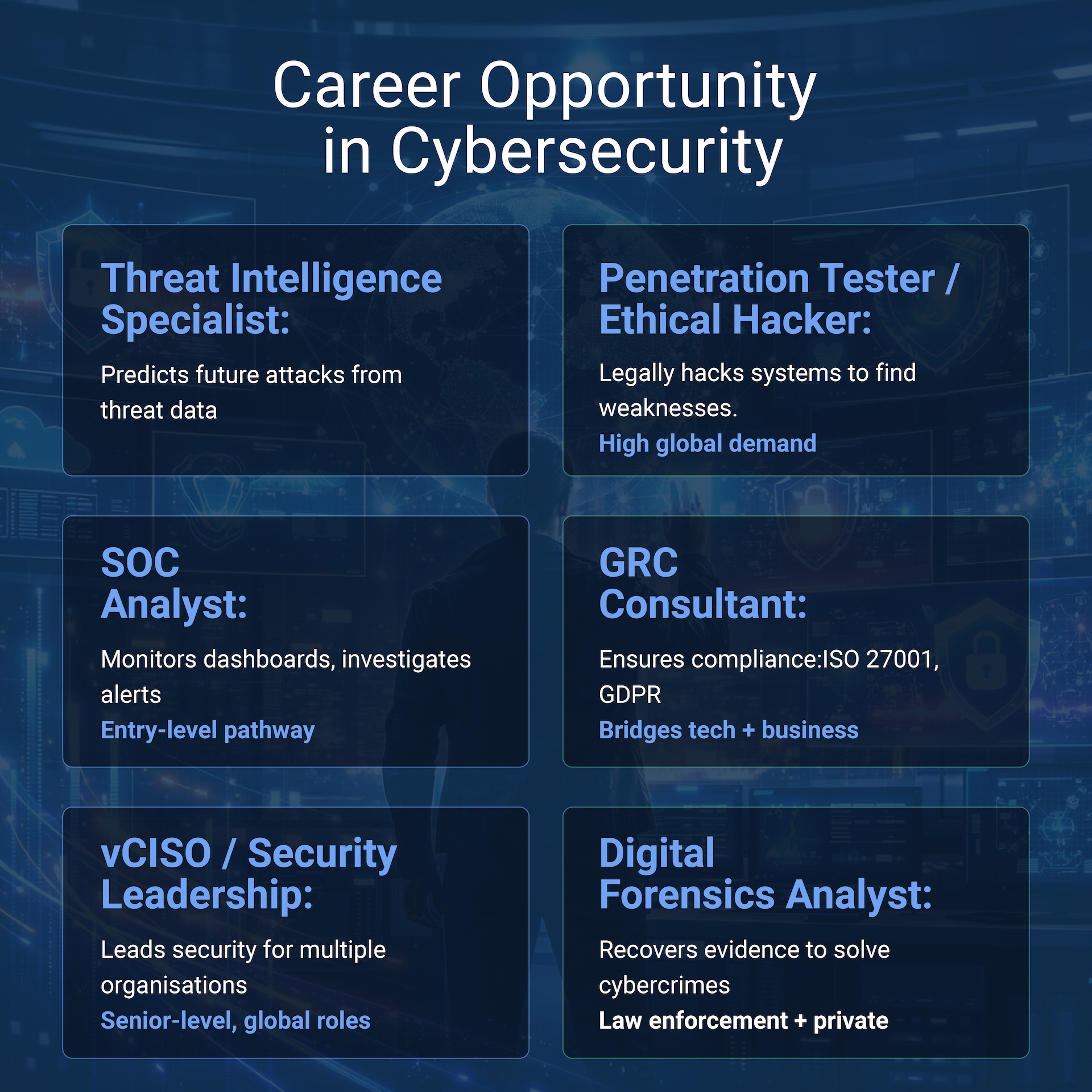
As of 2025, 4.8 million cybersecurity jobs remain unfilled globally. AI technologies create new work opportunities which demand advanced skills that combine technical abilities with interpersonal skills.
Nepal has received its most important opportunity for development because this chance has come to the country. The companies Vairav Technology and inRED Labs send Nepali employees to international markets while Islington College graduates work as chief technical officers, security architects and data scientists to connect Kathmandu with the global cybersecurity workforce.
Threat Intelligence Specialist
Security teams use threat data to create threat predictions which help them stop future attacks. This position has become one of the most rapidly expanding occupations within the field. The average annual global salary ranges between $95,000 and $140,000.
Penetration Tester / Ethical Hacker
Legally break into systems to find vulnerabilities before attackers do. The job requires employees who can work on projects while needing skills that companies demand throughout the world.
SOC Analyst
Monitor security operations centre dashboards in real time, investigating alerts and coordinating incident response. Entry-level pathway into cybersecurity.
GRC Consultant
The consultant helps organisations to meet security requirements which include ISO 27001 and GDPR and Cyber Essentials. The consultant works between technical and business sectors.
vCISO / Security Leadership
The Virtual Chief Information Security Officer handles security operations for multiple organisations through his security expertise. Senior cybersecurity experts with essential skills who are required by global organisations.
Digital Forensics Analyst
The analyst works to solve cybercrimes by retrieving digital evidence which he uses to assist in court cases. The private sector and law enforcement agencies both require more of these services.
Conclusion
Nepal has already begun using AI-based cybersecurity systems. The increasing number of cybercriminal activities together with the total of 4.8 million unfilled global positions and the existing shortage of skilled workers create a special chance for professionals in Nepal.
AI technology will enhance human abilities without replacing human work. The future of digital security will rely on skilled system developers and operational experts trained at Islington College. As a top institution in Nepal, Islington College offers industry-focused programmes in cybersecurity and AI, taught by industry professionals, giving students practical skills, strong industry exposure, and global opportunities.
The demand is real. The path is clear. The next step is yours.

FAQ
How is AI cybersecurity different from traditional cybersecurity?
Traditional security looks for known threats using fixed rules. AI security learns what “normal” behavior looks like and can spot unusual activity, even new types of attacks, while improving over time.
What is 'AI vs AI warfare' in cybersecurity?
It’s when both defenders and hackers use AI. Security systems try to stop attacks, while attackers use AI to make smarter, harder to detect threats, creating a constant battle between the two.
Will AI replace cybersecurity professionals?
No. AI supports professionals but does not replace them. There is still a huge global shortage of cybersecurity experts, so demand is very high.
What programmes does Islington College offer in cybersecurity and AI?
Islington College offers practical, industry focused programmes in cybersecurity and AI. Check their website for the latest details. islington.edu.np/programmes
Are Islington College programmes taught by people actually working in the industry?
Yes. Courses are taught by professionals who actively work in the industry. Students gain practical, real world skills from their experience.
Is an Islington College degree recognised internationally?
Yes. Islington College graduates work globally in cybersecurity and AI, with companies like Vairav Technology and inRED Labs placing them across Europe, America, Australia, and the Middle East.
Which programme should I choose — cybersecurity or AI?
If you like defending systems and stopping attacks, choose cybersecurity. If you enjoy building smart systems and working with data, choose AI. Many careers combine both.
Which cybersecurity job is best for beginners?
SOC Analyst is a top entry level role. You monitor dashboards, investigate alerts, and gain hands-on experience for advanced roles.
Will small businesses and schools in Nepal eventually get access to AI cybersecurity tools?
Yes. AI cybersecurity tools will become more affordable over time, but skilled professionals are still needed to manage them, making local talent in Nepal important.
What career roles are available in AI cybersecurity?
Key roles include Threat Intelligence Specialist, Penetration Tester, SOC Analyst, GRC Consultant, Virtual CISO, and Digital Forensics Analyst, all in high demand globally.
Can I get a cybersecurity job internationally from Nepal?
Companies like Vairav Technology and inRED Labs place Nepali professionals globally, and the cybersecurity talent shortage creates strong opportunities.
How is AI changing the skills needed for cybersecurity careers?
AI handles repetitive detection tasks but creates new roles like managing AI systems, interpreting threats, and leading incident response. Even advanced platforms like IBM X-Force still need skilled professionals for decisions and strategy.
Are cyber threats a real concern for families in Nepal?
Yes. Nepali banks have faced cyberattacks, and nearly 19,000 cybercrime cases were reported in 2024- 25, showing real risks in digital banking.
Will AI replace cybersecurity jobs in the future?
No. Artificial intelligence systems improve cybersecurity systems without eliminating their functions. Organizations require expert personnel to operate their advanced technological tools which perform security functions.
Why is cybersecurity education urgent for Nepal right now?
Nepal recorded nearly 19,000 cybercrime cases in 2024-25 and ranks 94th on the Global Cybersecurity Index. With growing digital payments and e governance, cybersecurity skills are now a national priority.
What are the emerging cybersecurity career paths students should prepare for?
Students should prepare for roles like AI Security Architect, Adversarial ML Specialist, and Cyber Threat Intelligence Analyst shaping future cybersecurity careers.
How can AI predict cyber attacks before they happen?
AI uses machine learning to detect unusual network activity, flag suspicious access in real time, simulate attacks, and share threat data quickly. IBM X Force can match the work of many human analysts.